At a Glance
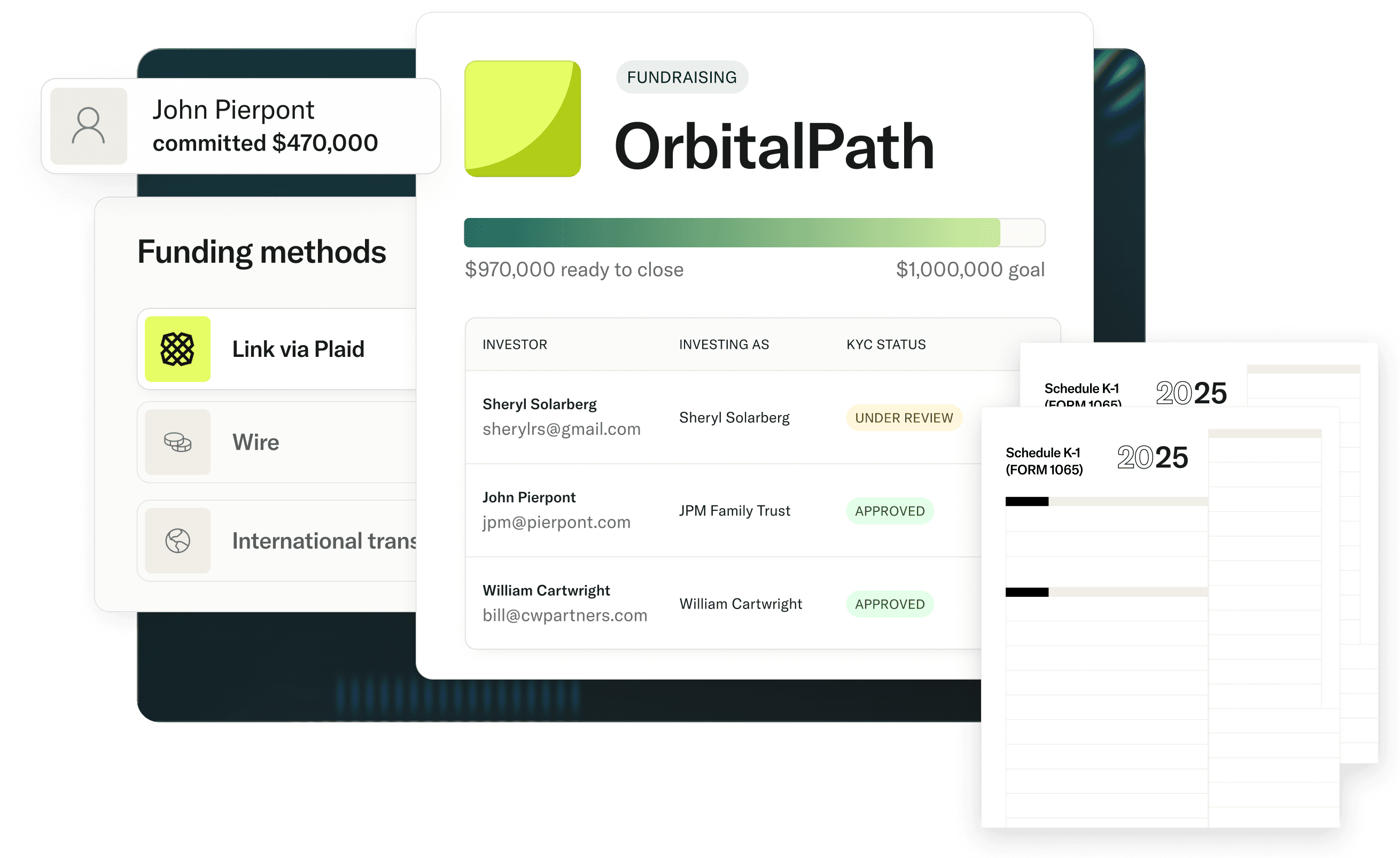
Know Your Customer (KYC) checks confirm each special purpose vehicle (SPV) investor's identity and risk.
Individuals typically provide a photo ID, proof of address, and a tax ID.
Entity investors add formation documents, signers, and owners of 25% or more.
The bank verifies the SPV, and administrators or platforms typically verify investors.
KYC and accredited investor status are separate questions.
What Is Investor KYC and Why Does It Apply to SPVs?
Definition: KYC verifies who an investor is and assesses their risk. In the US, it sits within anti-money laundering (AML) rules under the Bank Secrecy Act (BSA).
The bank where the SPV opens its account verifies the SPV as its customer. The Financial Crimes Enforcement Network (FinCEN) Customer Due Diligence (CDD) rule also requires it to identify anyone owning 25% or more, plus one control person. Administrators and platforms typically collect investor KYC under their own AML programs.
Several parties rely on investor identity verification and screening throughout the SPV process:
Banks verify the SPV before opening its account.
Administrators approve investors before accepting their subscription agreements (the documents investors sign to commit capital to the SPV).
Counsel relies on complete and accurate investor records, including identity and ownership information.
Limited partners (LPs) benefit from a process that screens investors against sanctions lists and helps the SPV identify potential compliance issues.
One unverified investor can hold up the close, so many SPV managers start KYC at soft commit.
The Three Layers: CIP, CDD, and EDD
Customer Identification Program (CIP): collects the account holder's name, birth date, address, and identification number
CDD: builds a risk profile, including beneficial ownership
Enhanced Due Diligence (EDD): adds scrutiny for higher-risk customers
EDD adds time, so many managers clear complex investors first.
Who Runs KYC in an SPV
SPV manager: invites investors, collects documents, and chases gaps
Administrator or platform: verifies and screens investors
Bank: verifies the SPV’s identity before opening its account, including its formation documents, ownership, and control information
Legal responsibility varies by structure, and many managers confirm it with counsel.
What Documents and Information Are Required?
Definition: These lists reflect typical industry practice. Requirements vary by bank and administrator.
Individual Investors
Unexpired government-issued photo ID, such as a passport or driver's license
Recent proof of address
Tax ID, or a passport number for non-US persons
Form W-9 for US persons, or a W-8 series form for non-US persons
Entity Investors and Beneficial Ownership
Trusts, limited liability companies (LLCs), and family office vehicles go through Know Your Business (KYB) review:
Formation documents, such as a partnership agreement or trust instrument
Employer Identification Number (EIN)
Authorized signers and proof of authority
IDs for owners of 25% or more, plus one control person
Each qualifying owner needs individual KYC.
How Does the KYC Process Work Step by Step?
Definition: The KYC process takes each investor through five steps before wiring.
Step | What Happens | Closing Impact |
|---|---|---|
Collection | Investor submits documents | Missing items often delay closing |
Verification | Reviewer matches documents to data | Mismatches trigger resubmission |
Sanctions Screening | Names run against the Office of Foreign Assets Control (OFAC) SDN list | Potential matches pause the investor |
Risk Rating | Reviewer assigns standard or enhanced review | Enhanced review adds time |
Approval | Investor clears | Investor can wire |
All US persons must comply with OFAC sanctions, and screening is the standard way to do so.
Source of Funds and Re-Verification
Under FFIEC guidance, a bank may seek source of funds and wealth from higher-risk customers. Each institution sets its own triggers. Politically exposed person (PEP) status alone is not automatically high-risk.
Repeat-LP re-check practices vary by administrator. FinCEN's FIN-2026-R001 order offers banks optional relief from repeat beneficial-owner verification. A new SPV typically opens a new account, so the full process applies.
How Is KYC Different From Accredited Investor Verification?
Definition: KYC determines who the investor is. Accredited investor verification asks whether the investor fits a category in 17 CFR 230.501(a).
KYC and AML | Accredited Investor Verification | |
|---|---|---|
Core Question | Who is this investor? | Does this investor qualify? |
Rule Source | BSA and institution policy | Regulation D |
Example Test | ID, address, ownership | Net worth over $1,000,000, excluding primary residence |
If It Fails | Funds cannot move | Investor cannot participate |
Passing one says nothing about the other, and a gap in either can stall a close.
What Slows Down KYC and How Can SPV Managers Avoid It?
Definition: KYC friction comes from incomplete or complex investor profiles.
Non-US investors: foreign IDs and W-8 tax forms
Layered entities: trusts owning LLCs, or layered SPVs, require mapping each owner
Mismatched documents: names or addresses that differ across files
Late starts: late checks compress review time
Built-in KYC and AML reduce back-and-forth. Sydecar's guided investor experience walks investors through KYC, signing, and wiring.
How Sydecar Handles Investor KYC
Sydecar runs KYC, KYB, and AML checks on every deal lead, investor, and beneficial owner holding 25% or more of an investing entity. All checks clear before any money moves.
Incomplete documents: Most investors pass verification using the information they enter during onboarding, checked against third-party data sources. Sydecar asks for ID, proof of address, or entity documents only when those checks can’t confirm identity.
Separate checks: KYC, KYB, AML, and accreditation run inside one guided onboarding flow on one platform. LPs complete them while they sign and wire.
Entity investors: KYB covers LLCs, trusts, and other entities, including their 25% beneficial owners. About a third of LPs who invest with independent venture managers on Sydecar invest through an entity.
Repeat LPs: Returning investors keep their verified profile from deal to deal. Sydecar reruns KYC only when an investor changes key identity information, so repeat LPs can usually invest without redoing verification.
Non-US investors: Sydecar supports investors from most countries. Investors who operate, invest, or bank in a jurisdiction Sydecar classifies as high risk complete enhanced diligence, including source-of-funds and source-of-wealth documentation.
Closing pressure: Investor KYC review happens immediately after Sydecar receives all required LP information. If an LP doesn't pass KYC right away, or if the control person doesn't have all required details, Sydecar emails that LP to complete or correct their information. Have first-time LPs finish onboarding well before your wire deadline.
LP privacy: Sydecar never markets its platform or services to your LPs and never shares LP data with other managers. The platform has no deal marketplace, and Sydecar is SOC 2 Type 2 certified.
Frequently Asked Questions
How Long Does Investor KYC Take?
On Sydecar, investor KYC review happens immediately after Sydecar receives all required LP information. If an LP doesn't pass KYC right away, or if the control person doesn't have all required details, Sydecar emails that LP to complete or correct their information.
What Happens if an Investor Fails KYC?
The reviewer usually requests corrected documents first. If the investor still cannot clear, the SPV generally cannot accept their capital.
Does the SPV Itself Go Through KYC?
Yes. The bank verifies the SPV as its CIP customer. When it cannot verify an entity otherwise, it may gather information on signatories.
How Does KYC Work for an IRA Investor?
Individual retirement account (IRA) assets sit with a custodian. Self-directed IRAs can hold private placement securities, and custodian paperwork practices vary.