At a Glance
An accredited investor is a Securities and Exchange Commission (SEC) designation that determines who can invest in private placements, including Special Purpose Vehicles (SPVs).
Investors qualify through financial thresholds, professional credentials, or entity status.
SPV managers carry a legal obligation to verify every investor's accredited status before accepting capital.
Accredited investor and qualified purchaser are separate designations that determine which fund exemption an SPV can use.
Verification ranges from self-certification questionnaires to third-party review of tax returns or professional letters.
What Is an Accredited Investor?
An accredited investor is someone the SEC has determined meets specific financial or professional criteria to participate in private securities offerings. The designation limits access to higher-risk investments to those who can absorb potential losses.
For SPV managers, this carries real consequences. Accepting a non-accredited investor into a Regulation D offering can trigger SEC enforcement, void the offering exemption, and create personal liability for the SPV lead.
Financial Qualification Criteria
An individual qualifies as an accredited investor by meeting either of these thresholds:
Income test: Earning $200,000 or more individually (or $300,000 jointly) in each of the two most recent years, with a reasonable expectation of the same in the current year
Net worth test: Holding $1 million or more in net worth, excluding the value of the primary residence. (A separate qualified client threshold applies for charging performance fees.)
Key calculation details for the net worth test:
The primary residence value is excluded from the asset side
Mortgage debt on a primary residence does not count as a liability (up to fair market value)
Home equity loans increased within 60 days of a securities purchase count as a liability
"Jointly" includes spouses and spousal equivalents (cohabitants in a relationship equivalent to a spouse)
Professional and Entity Qualifications
Individuals can also qualify through professional credentials:
Holders of Financial Industry Regulatory Authority (FINRA) Series 7, Series 65, or Series 82 licenses in good standing
"Knowledgeable employees" who participate in a private fund's investment activities
Directors, executive officers, or general partners of the company issuing the securities
Entities qualify through a separate set of criteria:
Trusts, LLCs, corporations, and partnerships with more than $5 million in assets (not formed solely for the acquisition)
Family offices with $5 million or more under management, directed by a financially sophisticated person
Any entity where every equity owner is individually accredited
Accredited Investors vs. Qualified Purchasers
These designations serve different regulatory purposes and determine which fund structure an SPV can use.
Accredited Investor | Qualified Purchaser | |
|---|---|---|
Individual threshold | $1 million net worth or income test | $5 million or more in investments |
Fund exemption | Section 3(c)(1) | Section 3(c)(7) |
Investor limit | 99 beneficial owners | No statutory cap |
Most venture SPVs operate under 3(c)(1), which caps the vehicle at 99 beneficial owners. Larger vehicles may need 3(c)(7), which requires qualified purchasers but removes the investor limit. This decision matters at formation because you cannot switch exemptions after structuring the SPV. Layered SPVs, where one SPV invests into another, may face higher investor qualification thresholds.
How SPV Managers Verify Accredited Status
SPV managers must take "reasonable steps" to verify each investor's status. Two primary methods exist:
Self-certification (Rule 506(b)): Investors complete a questionnaire affirming they meet accreditation criteria. This rule permits up to 35 non-accredited but sophisticated investors, along with unlimited accredited investors. No general solicitation allowed.
Third-party verification (Rule 506(c)): Managers review two years of tax returns, brokerage statements, or a written confirmation from a certified public accountant (CPA), attorney, or broker-dealer. This rule requires documented verification but allows general solicitation (public marketing of the offering).
Most venture SPV managers use 506(b) with self-certification because they raise from known networks. Managers who want to market publicly must use 506(c). Either way, strong verification records determine whether your exemption holds under regulatory scrutiny.
How Sydecar Simplifies Investor Verification
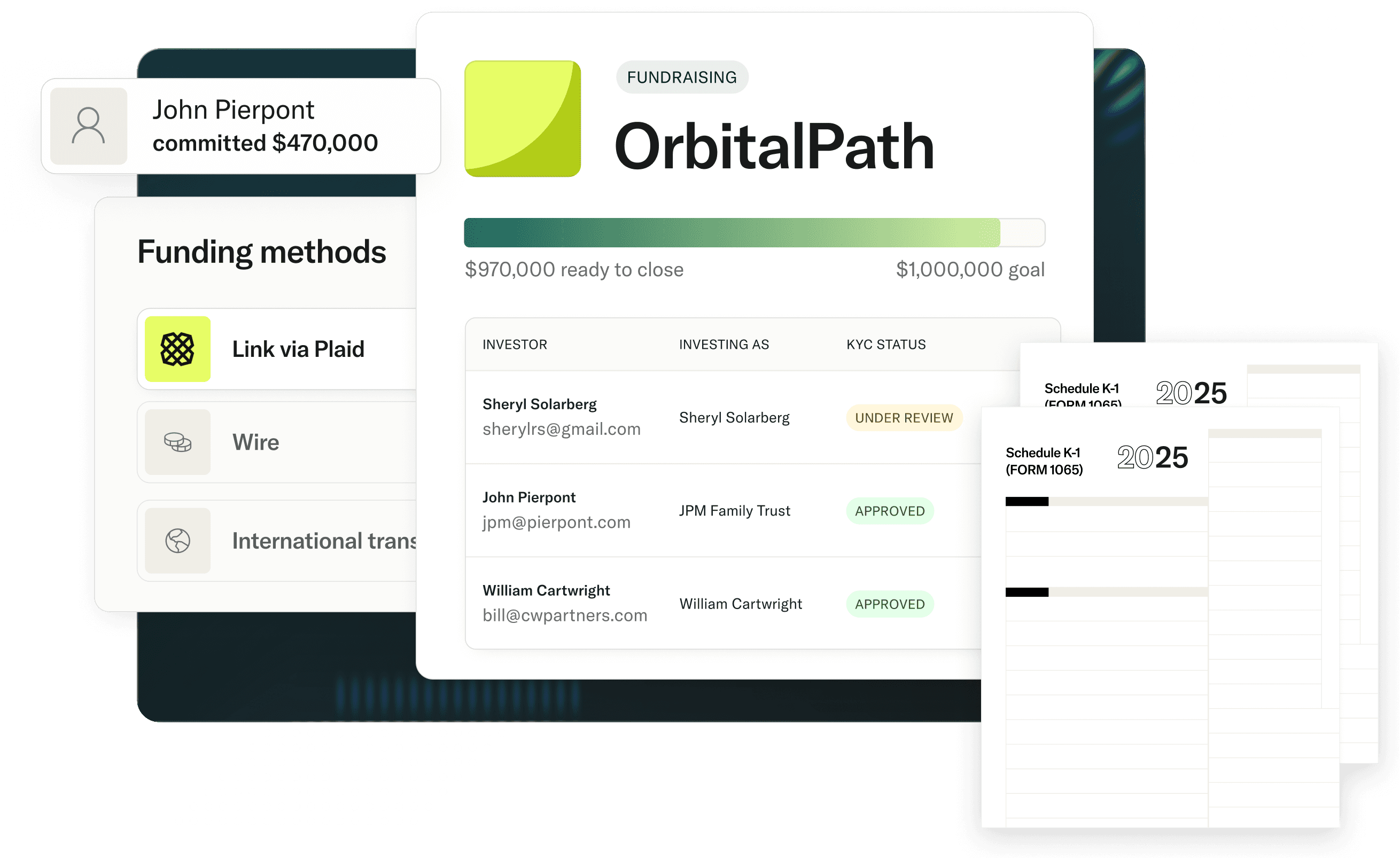
Tracking investor status across deals and coordinating separate Know Your Customer (KYC), Know Your Business (KYB), and Anti-Money Laundering (AML) workflows creates operational drag for lean teams. Sydecar addresses this by embedding compliance directly into investor onboarding:
When an investor receives a deal link, the platform collects accreditation information as part of the digital sign-and-wire process
KYC, KYB, and AML checks run alongside onboarding automatically
Investor verification records carry across deals, reducing repetitive documentation requests
For managers running many SPVs per year, this removes a recurring compliance bottleneck