At a Glance
Layered SPVs are structures where one SPV invests into another pass-through vehicle (often another SPV) that holds the direct allocation in a target company.
Managers increasingly use this strategy to access high-demand private companies when direct cap table access is not available.
Managers use layered SPVs to meet investor demand for later-stage, more liquid deals while staying within fund portfolio construction and concentration limits.
The structure introduces regulatory, operational, and tax complexity, including look-through rules, accreditation considerations, stacked fees, and K-1 timing.
Sydecar requires a formal attestation from the SPV manager before any layered SPV launches on the platform, confirming allocation access, fee transparency across every layer, and the accuracy of all material representations in the offering.
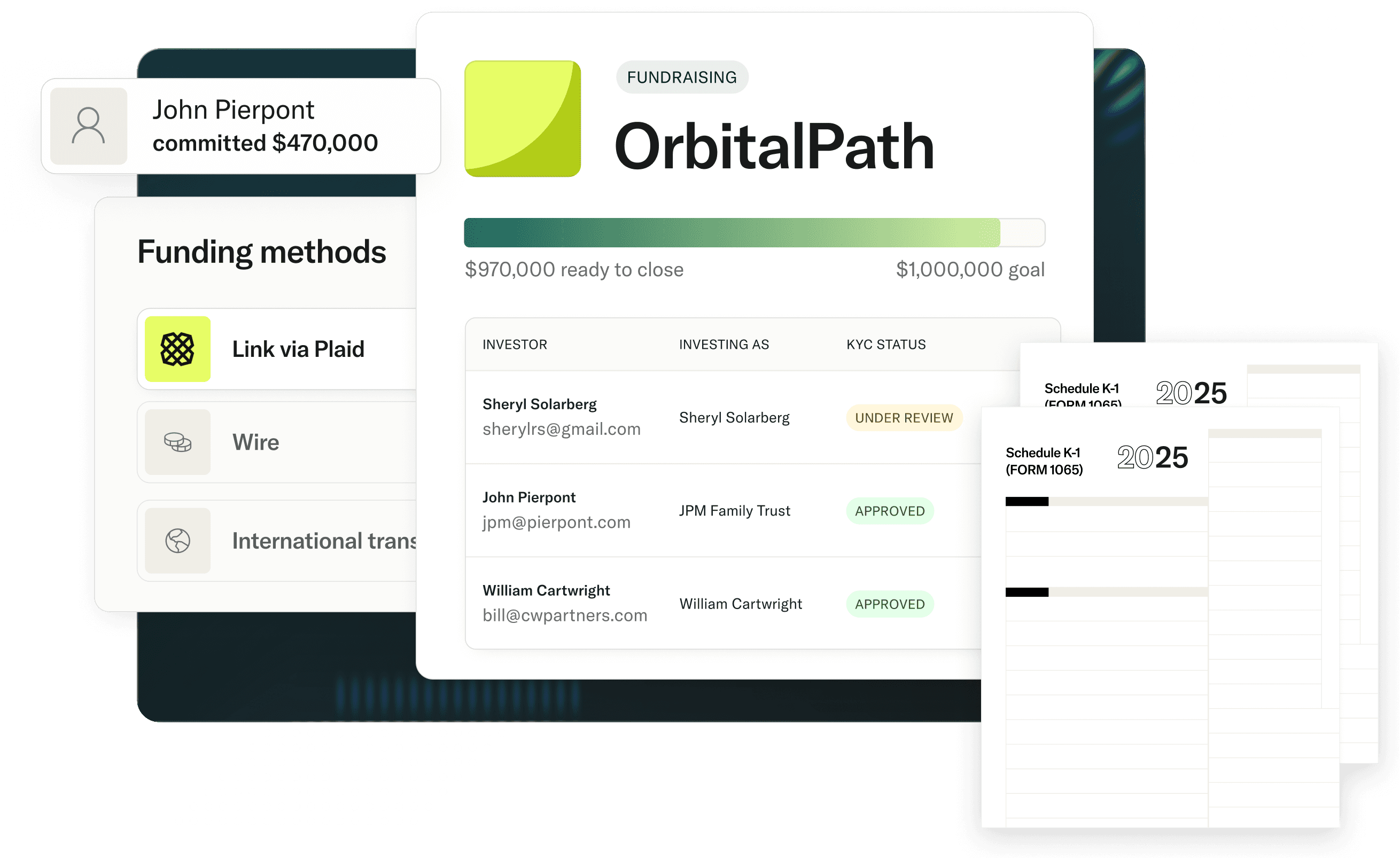
Sydecar supports layered SPV execution with a compliance-first platform that includes full lifecycle administration—formation, investor onboarding, banking, compliance, and taxes—so emerging managers can execute advanced deal structures while maintaining LP trust.
What Is a Layered SPV?
A layered SPV is an investment structure in which:
A manager forms an SPV to pool capital from investors, and
That SPV invests into another pass-through entity (often another SPV or fund) that holds the direct allocation in the target company.
Each entity in the chain is a pass-through vehicle, creating “layers” between the ultimate company and the end investors. Each SPV in the stack contributes capital up the chain until it reaches the vehicle that sits directly on the portfolio company’s cap table.
This approach allows multiple groups of investors to pool capital and participate in a single, high-value opportunity that might otherwise be out of reach due to:
High minimum check sizes
Limited cap table space
Relationships concentrated with a small number of lead investors or secondary sellers
Layered SPVs can help emerging managers provide access to sought-after deals and strengthen relationships with investors who want exposure to specific names or sectors.
Why Layered SPVs Are Increasingly Common
Several dynamics have made layered SPVs more prominent in recent years.
Access to High-Demand Deals
Emerging managers often struggle to meet the minimum check sizes required for coveted, later-stage, or secondary opportunities (for example, popular AI or pre-IPO companies). By investing through larger firms’ SPVs or funds that already have allocations:
Managers can participate without securing a direct cap table allocation.
Smaller vehicles can join allocations in the $10–50 million range through a single, pooled exposure.
Investor Demand for Later-Stage and More Liquid Exposure
After periods of weaker venture returns and longer exit timelines, many investors seek:
Later-stage deals with clearer paths to liquidity.
Opportunities in well-known companies with more established financials.
Layered SPVs can help emerging managers meet this demand without shifting the core focus of their flagship fund or syndicate away from earlier-stage opportunities.
Portfolio Construction and Concentration Limits
Standard fund documents often limit how much capital a fund can invest in a single company. Layered SPVs provide a way to:
Maintain discipline in the flagship fund, while
Raising additional capital through a dedicated sidecar SPV that invests alongside or into another vehicle with exposure to the same company.
This enables managers to increase exposure to high-conviction companies without breaching fund concentration limits.
Regulatory and Structural Considerations
Layered structures sit at the intersection of fund regulation, investor limits, and accreditation requirements. Emerging managers should understand several key concepts.
Look-Through Rules and Investor Limits
When an SPV invests in another SPV or fund that relies on an exemption such as Section 3(c)(1) or 3(c)(7) of the Investment Company Act of 1940, the manager of the underlying vehicle may need to “look through” the investing SPV and count its investors toward certain limits.
Examples include:
Statutory Issues (3(c)(1) 100/250 investor limits): Where an SPV owns 10% or more of an underlying 3(c)(1) fund, the entity’s investors may be counted toward the 100- or 250-investor cap. A $100,000 check that represents 20 underlying investors is less attractive than a single $100,000 investor for this reason.
Regulatory Issues (purpose tests and no-action guidance): SEC guidance and no-action letters suggest that if an SPV invests more than 40% of its assets in another 3(c)(1) or 3(c)(7) vehicle, regulators may presume the SPV was formed for the purpose of investing in that underlying fund. In such cases, the SPV’s investors may need to be counted toward the underlying vehicle’s investor limit.
In both scenarios, structure and intent matter. Managers must avoid designing SPVs solely to circumvent investor limits or regulatory provisions.
Investor Qualification and Accreditation
An SPV that invests into another pass-through entity may face higher investor qualification thresholds than a typical direct-investment SPV. For example, it may require:
Qualified purchaser status
rather than standard accredited investor status, depending on the underlying fund’s structure and applicable rules.
Managers should:
Confirm the requirements of the underlying vehicle.
Ensure their investor base meets the necessary standards.
Communicate those requirements clearly in offering materials.
Fiduciary Duties
Layered SPVs create additional fiduciary considerations. Managers should:
Evaluate whether fees and expenses at each layer are reasonable relative to access and expected returns.
Avoid structures that heavily skew economics toward intermediaries at the expense of end investors.
Ensure that documentation and disclosures clearly describe each layer, associated fees, and potential conflicts.
Transparent documentation is not optional; it is the foundation of LP trust in layered structures. Sydecar requires SPV managers to complete a formal attestation before launching a layered SPV on the platform. That attestation confirms allocation access, the transferability of securities, required issuer consents, and the accuracy of every material representation in the offering.
Operational and Tax Complexity
Beyond regulatory considerations, layered SPVs introduce meaningful operational and tax complexity.
Operational Complexity
Managers must coordinate:
Different SPVs with potentially different advisors, legal structures, and timelines.
Subscription, closing, and funding schedules for both the investing SPV and the underlying vehicle.
Ongoing communication so that investors understand that their SPV is investing into another SPV or fund, not directly into the portfolio company.
If the underlying SPV or fund ultimately does not complete its investment:
Investors may receive capital back from the investing SPV, reduced by fees or expenses.
They may still receive a K-1 and have tax reporting obligations, even though the target company was never added to the portfolio.
Clear communication about outcomes and contingencies is essential.
Tax Complexity and K-1 Timing
Layered SPVs are still pass-through entities. This means:
Each SPV receives a Schedule K-1 from the vehicle above it in the stack.
It cannot complete its own return or issue K-1s to its investors until it has received upstream K-1s.
The more layers in the structure:
The longer the chain of K-1s.
The greater the risk that downstream investors receive their K-1s later in the year.
Investors may need to extend the filing date of their own tax returns, which can be a source of frustration if not anticipated and communicated upfront.
Investor Perspective: Fees and Alignment
Investors often have mixed views on layered SPVs because of stacked fees:
When multiple layers of fees (management fees and carry) apply, the effective cost of access can increase.
Higher fees reduce the amount of capital meaningfully exposed to the underlying company.
Some managers address this by:
Reducing or waiving certain fees at one or more layers.
Offering preferential economics to existing fund LPs.
Framing layered SPV opportunities as a value of access rather than a primary return driver.
Transparent communication and thoughtful fee structures are essential. Investors are more likely to remain engaged when they:
Understand the full fee stack.
Believe the economics are fair relative to the access provided.
See layered SPVs as one component of a broader relationship with the manager.
The Role of a Reliable Admin Partner
Given the regulatory, operational, and tax complexities of layered SPVs, a dependable administration partner enables managers to execute these structures quickly without sacrificing LP trust.
Sydecar gives emerging fund managers the infrastructure to execute advanced SPV structures while maintaining transparency with their investors. The platform is compliance-first by design. Before any layered SPV launches, Sydecar requires deal leads to complete a formal attestation confirming the accuracy of their allocation access, the disclosures made to investors, and the transferability of securities involved. This step is built seamlessly into the deal creation workflow.
For layered SPV use cases, Sydecar handles the full lifecycle of the deal:
Formation and compliance: Standardized documentation and disclosures so investors clearly understand that their SPV invests into another vehicle, including full fee disclosure across every layer.
Investor onboarding and banking: Streamlined capital collection with automated workflows that coordinate with the timeline of the underlying vehicle.
Tax reporting and K-1 distribution: A single system of record that tracks capital flows across layers and coordinates K-1 delivery as efficiently as the structure allows.
Investor experience: Consistent portal access and communication tools so investors stay informed at every stage.
Managers can set up and launch SPVs for layered investments in hours, not days. That speed, paired with compliance infrastructure built for this deal type, is what makes it possible to meet investor demand for top deals while building a reputation for integrity with LPs.
Key Takeaways for Emerging Managers
Before launching or participating in a layered SPV, managers should:
Clarify the rationale. Confirm that the access, exposure, or relationship benefits justify the added complexity and fees.
Understand regulatory constraints. Work with counsel to evaluate look-through rules, investor limits, and qualification requirements.
Model the fee stack. Ensure that net exposure and potential returns remain attractive for investors.
Plan for operations and tax. Account for additional coordination, K-1 timing, and communication needs.
Choose the right infrastructure. Use a platform that supports layered structures with transparent admin, robust compliance, and scalable tax and reporting workflows.
With the right diligence, partners, and infrastructure, layered SPVs can be a useful tool for accessing high-demand deals while still aligning with your responsibility to investors and your long-term strategy as an emerging manager.
If layered SPVs are becoming part of your strategy, you’ll need infrastructure that supports compliance, K-1s, onboarding, and reporting without added operational drag. See how easy it is to set up a layered SPV with our interactive demo: